
Advertising, Amazon, Amazon PPC, Ecommerce, Pay per click
𝐌𝐨𝐬𝐭 𝐩𝐞𝐨𝐩𝐥𝐞 𝐭𝐡𝐢𝐧𝐤 𝐬𝐦𝐚𝐥𝐥 𝐦𝐚𝐫𝐤𝐞𝐭𝐬 𝐝𝐨𝐧’𝐭 𝐩𝐫𝐨𝐝𝐮𝐜𝐞 𝐛𝐢𝐠 𝐫𝐞𝐬𝐮𝐥𝐭𝐬.
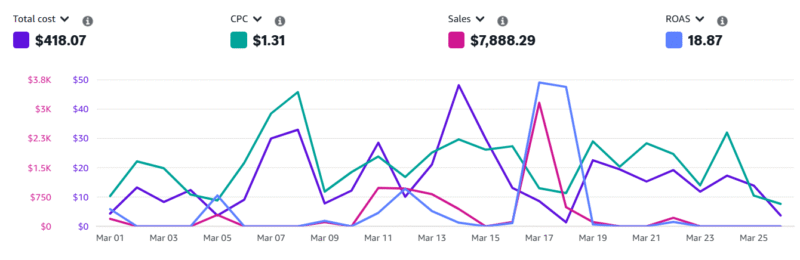
Singapore proved otherwise this month.
Over the past 25 days, the focus wasn’t on spending aggressively. The focus was on precision targeting the right keywords, optimizing bids carefully, and letting performance data guide every decision.
𝐇𝐞𝐫𝐞’𝐬 𝐰𝐡𝐚𝐭 𝐭𝐡𝐞 𝐧𝐮𝐦𝐛𝐞𝐫𝐬 𝐥𝐨𝐨𝐤𝐞𝐝 𝐥𝐢𝐤𝐞:
🇸🇬 𝐒𝐢𝐧𝐠𝐚𝐩𝐨𝐫𝐞 𝐌𝐚𝐫𝐤𝐞𝐭𝐩𝐥𝐚𝐜𝐞 25 𝐃𝐚𝐲𝐬 𝐏𝐞𝐫𝐟𝐨𝐫𝐦𝐚𝐧𝐜𝐞
Ad Spend: $418.07
Sales Generated: $7,888.29
Avg CPC: $1.31
ROAS: 18.87
𝐋𝐞𝐬𝐬 𝐭𝐡𝐚𝐧 $420 𝐢𝐧 𝐚𝐝 𝐬𝐩𝐞𝐧𝐝 𝐠𝐞𝐧𝐞𝐫𝐚𝐭𝐞𝐝 𝐧𝐞𝐚𝐫𝐥𝐲 $8𝐊 𝐢𝐧 𝐬𝐚𝐥𝐞𝐬.
But the real story sits inside the graph.
Early in the month, campaigns were gathering data testing keywords, placements, and identifying which search terms were actually converting.
Mid-month, the signals became clearer.
Winning keywords started driving stronger sales.
Budget was shifted toward high-converting targets.
Low-performing areas were trimmed.
Then the momentum kicked in.
A few high-performing days significantly boosted revenue, proving that when campaigns are structured properly, even a modest budget can unlock strong returns.
That’s the reality of marketplace advertising.
It’s not about throwing money into ads.
𝐈𝐭’𝐬 𝐚𝐛𝐨𝐮𝐭 𝐮𝐧𝐝𝐞𝐫𝐬𝐭𝐚𝐧𝐝𝐢𝐧𝐠 𝐬𝐢𝐠𝐧𝐚𝐥𝐬, 𝐚𝐝𝐣𝐮𝐬𝐭𝐢𝐧𝐠 𝐬𝐭𝐫𝐚𝐭𝐞𝐠𝐲, 𝐚𝐧𝐝 𝐬𝐜𝐚𝐥𝐢𝐧𝐠 𝐰𝐡𝐚𝐭 𝐰𝐨𝐫𝐤𝐬.
And when the system is built correctly, the results start compounding.
Sometimes the biggest lessons come from the smallest markets.
