
Advertising, Amazon, Amazon PPC, Ecommerce, Pay per click
𝐌𝐨𝐬𝐭 𝐩𝐞𝐨𝐩𝐥𝐞 𝐥𝐨𝐨𝐤 𝐚𝐭 𝐚𝐝 𝐬𝐩𝐞𝐧𝐝 𝐟𝐢𝐫𝐬𝐭.
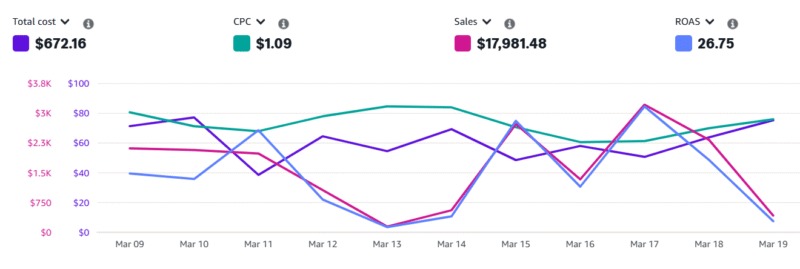
I look at the story behind the spend.
𝐎𝐯𝐞𝐫 𝐭𝐡𝐞 𝐥𝐚𝐬𝐭 10 𝐝𝐚𝐲𝐬 𝐢𝐧 𝐭𝐡𝐞 𝐀𝐮𝐬𝐭𝐫𝐚𝐥𝐢𝐚𝐧 𝐦𝐚𝐫𝐤𝐞𝐭, 𝐭𝐡𝐞 𝐧𝐮𝐦𝐛𝐞𝐫𝐬 𝐭𝐨𝐥𝐝 𝐚 𝐯𝐞𝐫𝐲 𝐢𝐧𝐭𝐞𝐫𝐞𝐬𝐭𝐢𝐧𝐠 𝐬𝐭𝐨𝐫𝐲.
Not a story of spending more.
A story of spending smarter.
𝐇𝐞𝐫𝐞’𝐬 𝐰𝐡𝐚𝐭 𝐭𝐡𝐞 𝐝𝐚𝐭𝐚 𝐫𝐞𝐯𝐞𝐚𝐥𝐞𝐝:
Ad Spend: $672.16
Sales Generated: $17,981.48
Avg CPC: $1.09
ROAS: 26.75
Let that sink in for a moment.
Less than $700 in ad spend turned into nearly $18K in revenue.
But the real insight wasn’t the final number.
Around the middle of the period, performance dipped. Campaign signals shifted. Conversion momentum slowed.
𝐈𝐧𝐬𝐭𝐞𝐚𝐝 𝐨𝐟 𝐢𝐧𝐜𝐫𝐞𝐚𝐬𝐢𝐧𝐠 𝐛𝐢𝐝𝐬 𝐨𝐫 𝐟𝐨𝐫𝐜𝐢𝐧𝐠 𝐬𝐩𝐞𝐧𝐝, 𝐰𝐞 𝐥𝐞𝐭 𝐭𝐡𝐞 𝐝𝐚𝐭𝐚 𝐠𝐮𝐢𝐝𝐞 𝐭𝐡𝐞 𝐝𝐞𝐜𝐢𝐬𝐢𝐨𝐧𝐬.
Keywords were refined.
Budget was redistributed.
Winning placements were prioritized.
Then the flywheel kicked in.
A few days later, the graph spiked again stronger than before.
That’s the difference between running ads and engineering growth.
Amazon PPC isn’t about throwing money into campaigns and hoping sales follow.
It’s about understanding the signals, adjusting the system, and letting optimization compound.
And when it does Small budgets can produce big outcomes.
If you’re selling on Amazon and your ads feel unpredictable, the problem usually isn’t the budget.
It’s the strategy behind it.
